
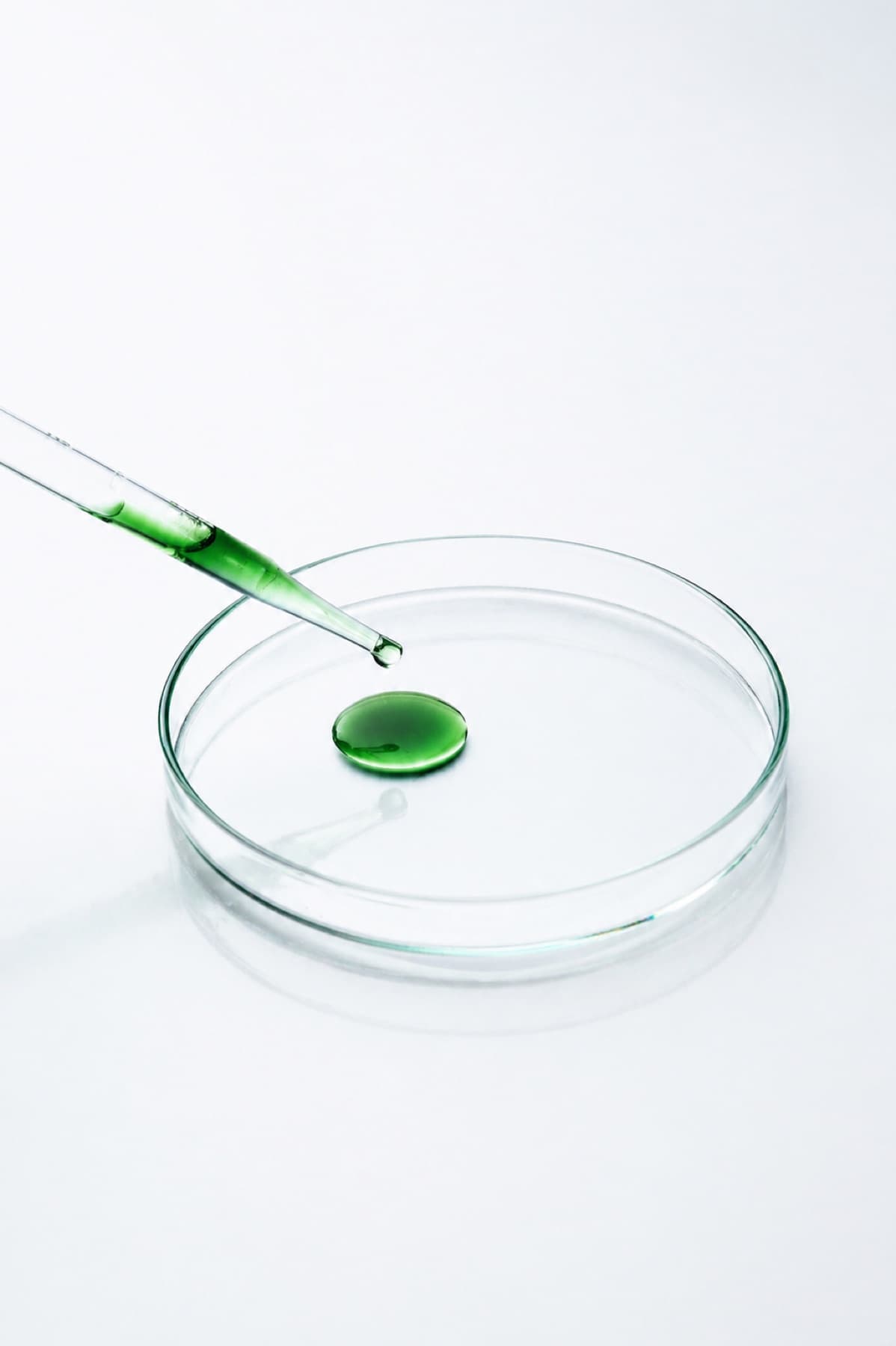
The job of a leaf
A leaf is a sheet of solar panels. Its job is to capture sunlight and convert the energy into chemical bonds that the rest of the plant can store, ship, and spend later. The molecule that does most of the capturing is chlorophyll.
The arithmetic is simple. Sunlight in. Carbon dioxide and water in. Sugar and oxygen out. The plant gets the sugar. The atmosphere gets the oxygen. Almost every animal alive, including us, breathes the byproduct of a chemical reaction that runs on this single class of molecule.
The geometry of the molecule
Chlorophyll is a porphyrin ring with a magnesium atom at its center, attached to a long lipid tail. The ring is the part that interacts with light. The tail anchors the molecule into the membrane of the chloroplast, where the reaction takes place.
There are two main forms in plants, called chlorophyll-a and chlorophyll-b. They have slightly different absorbance peaks, which lets them between them capture more of the available light spectrum than either could alone. The difference is small. The redundancy is part of why the system is robust.
The structural similarity to hemoglobin, the molecule that carries oxygen in human blood, is striking. Hemoglobin has the same core ring with an iron atom at the center instead of magnesium. The molecules that move oxygen in two of the great kingdoms of life are not coincidentally related.
The absorbance gap and the color of green
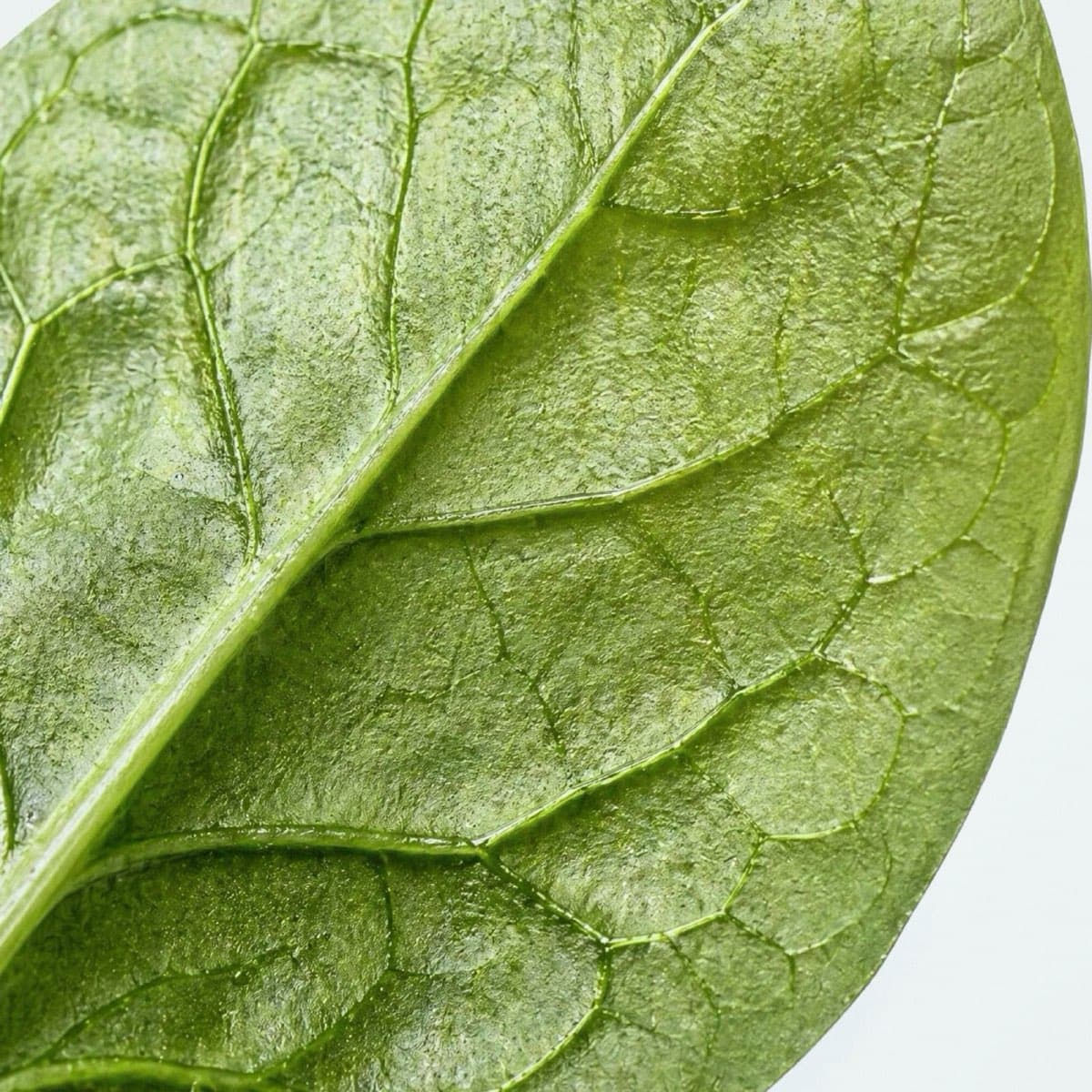
Chlorophyll absorbs strongly in red and blue light, with peaks roughly around four hundred and thirty and six hundred and sixty nanometers for chlorophyll-a. It absorbs poorly in green light, which sits in the gap between those peaks. The light it cannot use, it reflects.
We see plants as green for a simple reason. Green is the color of the wavelengths that chlorophyll throws back to us. The richness of the visible green world is, in a sense, a pile of unused light.
It is worth pausing on that. Of all the colors plants could have evolved into, they ended up the color of the wavelengths their main work happens to discard. The aesthetics of the visible biosphere are a side effect.
The 2.5-billion-year timeline
Photosynthesis is older than most things on Earth. The first organisms that performed it were ancestors of modern cyanobacteria, sometime before two and a half billion years ago. They consumed carbon dioxide and emitted oxygen as a waste product.
For most of the planet's earlier history, the atmosphere had been low in free oxygen. The Great Oxygenation Event, which began roughly two and four-tenths billion years ago, raised atmospheric oxygen to a level where animal life later became possible. The cyanobacteria that drove that event were running on the same molecule that runs photosynthesis today.
The framing is worth keeping. The atmosphere we breathe is the long-form output of one of the simplest molecular machines in biology, repeated across an unimaginable number of generations.
What we have done with it since
Chlorophyll has had a quieter human history than its biological one. It has been used as a dye, a food coloring, and a fragrance. In the mid-twentieth century, a derivative form called sodium copper chlorophyllin was studied for ingestible use, beginning with hospital research on odor management in patients with colostomies. That research seeded a small, careful tradition of using the molecule inside the body rather than only on plants.
The recent return of chlorophyll into wellness conversation has been louder than the science deserves at times. The molecule itself is real, useful, and has a long, mostly modest body of literature behind it. The viral moments do not change that. They just obscure it temporarily.
Outside any one product or trend, the better way to read chlorophyll is as a piece of the planet that does enormous work without being visible. The leaf is the visible part. The reason for the leaf is the part underneath.
It is a good molecule to spend a few minutes with. The world it produces is the world we live in. The fact that the green color of the planet is the discarded part of its work, rather than the point of it, is the kind of detail worth keeping.