

The afternoon reapply
The pattern is familiar. A clean morning, a clean shirt, a deodorant that worked yesterday. By two in the afternoon, something has shifted. The routine that felt complete in the bathroom is asking to be redone in a meeting bathroom.
It is tempting to read that as a deodorant failing. Often it is something simpler. The product is doing what it was built to do. It is meeting a load that did not start at the surface.
The reason this matters is practical. If the load is the variable, a stronger version of the same product will not solve it. The right answer is not a heavier surface tool. It is a different intervention point in the chain.
Where odor actually forms
Many of the compounds responsible for body odor are metabolic in origin. Many of them form during digestion as the body processes proteins, sulfur compounds, and other inputs from food and drink. Those compounds enter the bloodstream and are eventually carried outward through breath, sweat, and skin.
By the time odor reaches a deodorant or a breath spray, it has already traveled. The surface product is not the origin. It is the final stage. The path explains why some days a routine holds easily and others it does not, even when nothing about the surface routine has changed.
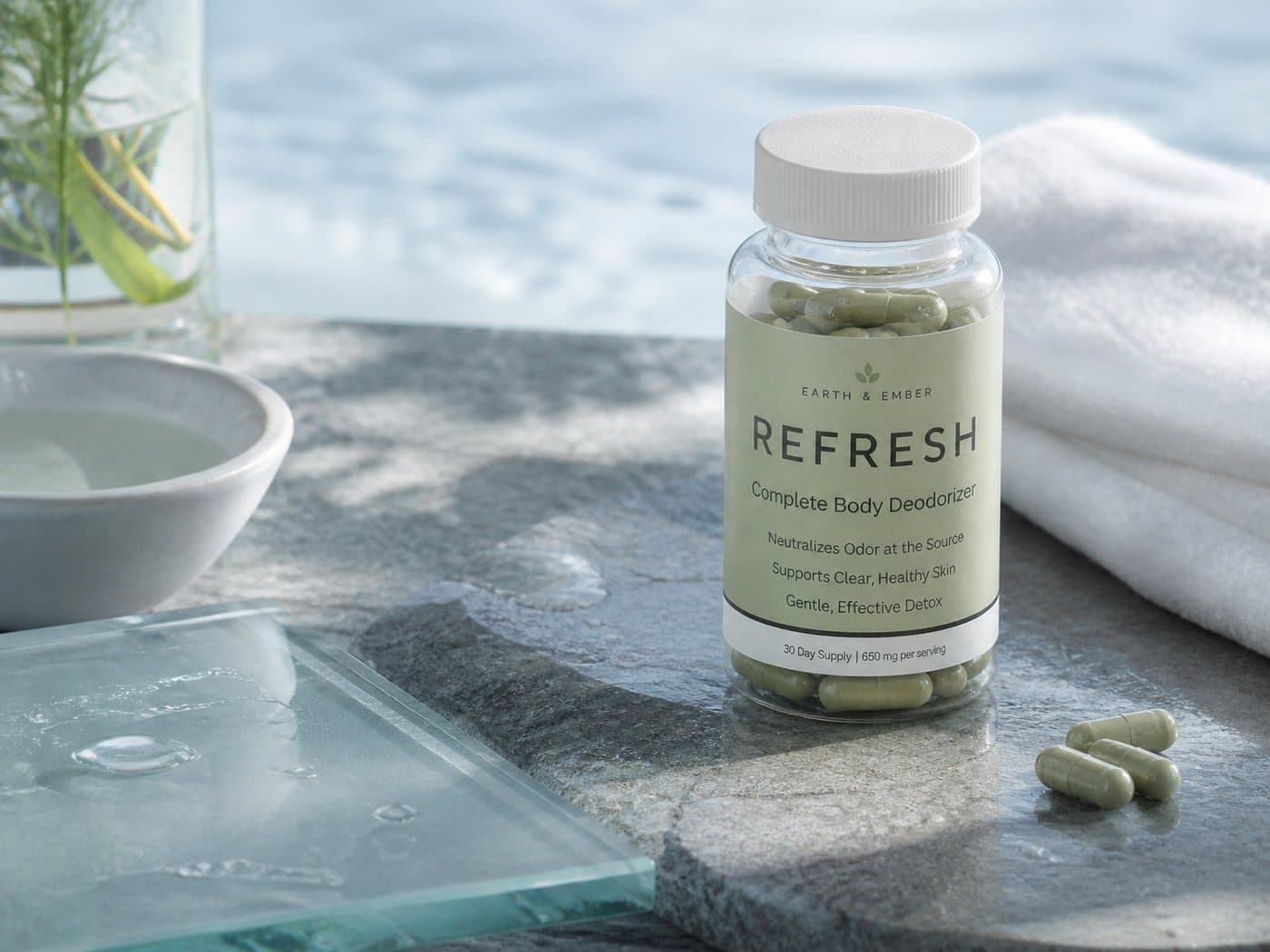
It also explains why an internal product is described as a foundation rather than a fix. The point is not to do the surface tool's job. The point is to give it less to absorb.
Why the surface arrives late
Surface products are built to mask, neutralize, or temporarily reduce odor at the point it appears. They are precise tools. They are also reactive by design. They cannot work on something that has not yet shown up, and they cannot reach the upstream chemistry that decided how strong the load would be.
When the load is light, the surface product looks heroic. When the load is heavy, the same product looks underpowered. The product did not change. The input did. Most of what people read as deodorant inconsistency is, on a closer read, input inconsistency.
This is why a careful routine keeps the deodorant and the foundation in different layers. The deodorant absorbs what reaches the surface. The foundation decides how much reaches it.
What 'address the source' means in practice
Addressing the source is not a slogan. It is a different intervention point. Instead of waiting for odor at the skin, an internal deodorant step starts earlier, before breath, sweat, and skin carry the signal outward.
This is why an internal product is designed for daily compounding. It is not trying to replace the deodorant. It is trying to lower the workload the deodorant has to absorb across the day.
The visible effect of that, when it works, is quieter than people expect. Less reaching for the spray after lunch. A breath read in the late afternoon that does not need an emergency rinse. The signal of an upstream change is usually the absence of a familiar moment, not the presence of a new one.
The compatible read
Internal and external are not in competition. They sit at different points in the same chain. The cleanest version of a routine has both, with the internal step going first and the surface step finishing the job.
Most customers who report a settled baseline describe the same shape. The deodorant still goes on. They just do not reach for it the way they used to. The shower still happens. They just walk out of it cleaner for longer.
This is the read REFRESH is built around. Not a replacement story. A foundation story, with the surface tools doing exactly what they have always done well.