

Why timelines matter for an internal product
REFRESH does not work like a deodorant. A deodorant changes the surface in seconds. An internal product changes the input over days and weeks. The timeline is part of how it is designed to work.
The honest version is that the first day is rarely the most informative day. The most useful read comes from the shape of a few weeks, not the shape of a single afternoon.
We say this clearly because the wellness category often promises a same-day shift. We are not going to. The shift we expect customers to notice is the kind that gets clearer the longer you watch for it.
Week one: the first signal
Many customers describe the first signal somewhere inside the first week. It often shows up as a small thing. A shorter list of moments where they noticed odor. A breath read in the late afternoon that was cleaner than they expected. Less reaching for the spray after lunch.
It is normal for this signal to be quiet. We would rather a quiet signal than a loud one. Quiet is what compounding looks like at the start.
If week one is uneven, that is also normal. Sleep, stress, food, and travel all change the input the body is processing on any given day. A messy first week is not a failed first week.
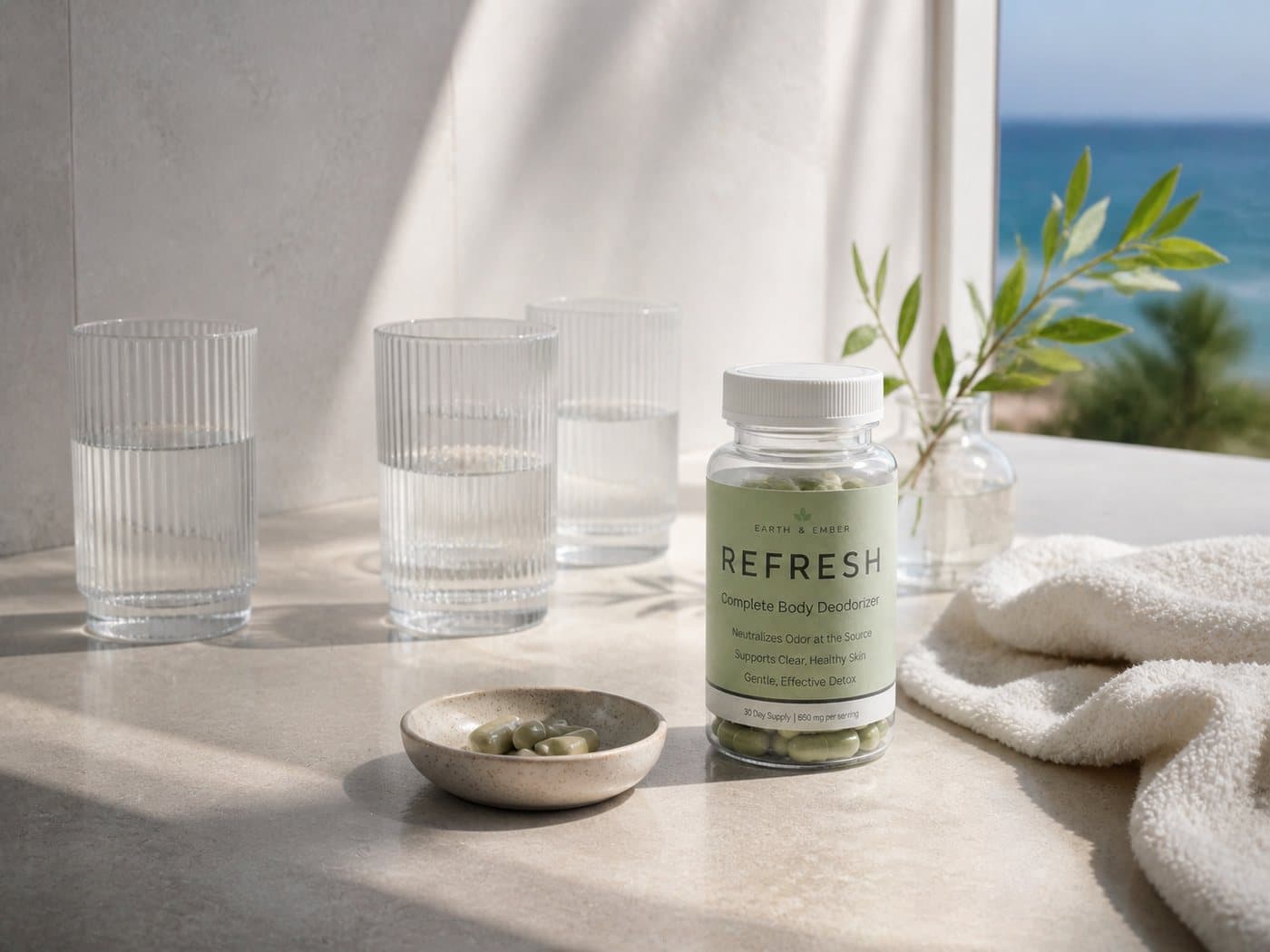
Weeks two and three: the compound
By the second and third week, the signal usually has more shape. Many customers describe a more even baseline across full days. Travel and high-pressure moments tend to show the difference more visibly than quiet mornings, because that is where the surface product is asked to absorb the most.
If you tracked nothing else, this is the part of the month worth tracking. How the body holds across the harder hours.
It is also a useful window to notice what is not happening. The mid-afternoon reapply that did not get triggered. The shirt that did not turn before the meeting. The signal of an upstream change is often an absence rather than a presence.
Week four: a new baseline
By the end of the first month, the read is less about specific moments and more about the routine as a whole. The list of products on the counter has not necessarily shrunk. The way the day unfolds with them has.
This is where REFRESH is designed to start feeling settled. Not heroic. Not dramatic. Just present, in a way the body has adjusted around.
If anything, the moment to watch in week four is the moment when you realize you have not thought about the product in a few days. That is the version of the result we built for. Confidence at rest, working in the background.
What honest tracking looks like
Track lightly. A short note at the end of the week is more useful than a long one each day. Three things are worth watching: how often you reached for surface products, how the late afternoon read, and how a high-pressure moment held.
If something is unclear at the end of 30 days, the Inside-Out Guarantee is there for that. It is a 30-day window precisely because the first 30 days are the right length to make a read.
If REFRESH is not working for you after 30 days of consistent daily use, we refund your full order. We hold that line because the rest of the page does not ask it to do anything it cannot.
The honest version of tracking is also forgiving. A messy week is allowed. A late afternoon that goes sideways is allowed. We are not chasing perfect consistency. We are chasing the shape of a normal month that is a little easier to keep.