

Why we needed a word for it
For most of modern hygiene, the vocabulary points outward. Soap, deodorant, brushing, rinsing, scrubbing. The shape of the routine assumes the problem is on the surface and the solution is a stronger surface product. That assumption carried the category a long way. It also has limits.
Internal hygiene is the language for the part that comes before any of that. The daily care of the systems that produce the things we eventually wash off. Digestion, mineral and vitamin baseline, hydration, sleep, and how the body processes what goes in. The term is not an upgrade on personal hygiene. It is the missing half of it.
Once the word exists, the gap is hard to unsee. Most people have opinions on shower temperature and toothbrush bristle stiffness. Very few have a clear picture of the upstream step that decides how much work those tools have to do. Naming the upstream is the first step toward giving it a place on the counter.
Where the gap shows up in a regular day
The afternoon reapply. The breath that returns a few hours after brushing. The shirt that turns before lunch. The sense that the routine works for a while, then quietly stops carrying. These are not edge cases. They are the most common shared experience of a hygiene routine that runs only at the surface.
These moments share a structure. They are surface products meeting a load that did not begin at the surface. It is not that the surface products are failing. They are doing the job they were built to do. They are arriving late.
The framing matters because it changes what you reach for next. A stronger spray will not reach further upstream than the spray you already have. A different deodorant is still a deodorant. The honest move when a routine stops carrying is to add the part that was missing, not to keep replacing the part that was always there.
What internal hygiene actually includes
Internal hygiene is broader than any one product. It includes hydration, fiber and digestion, sleep that supports recovery, mineral intake, and the daily decisions about food that affect what eventually surfaces. None of it is glamorous. All of it compounds.
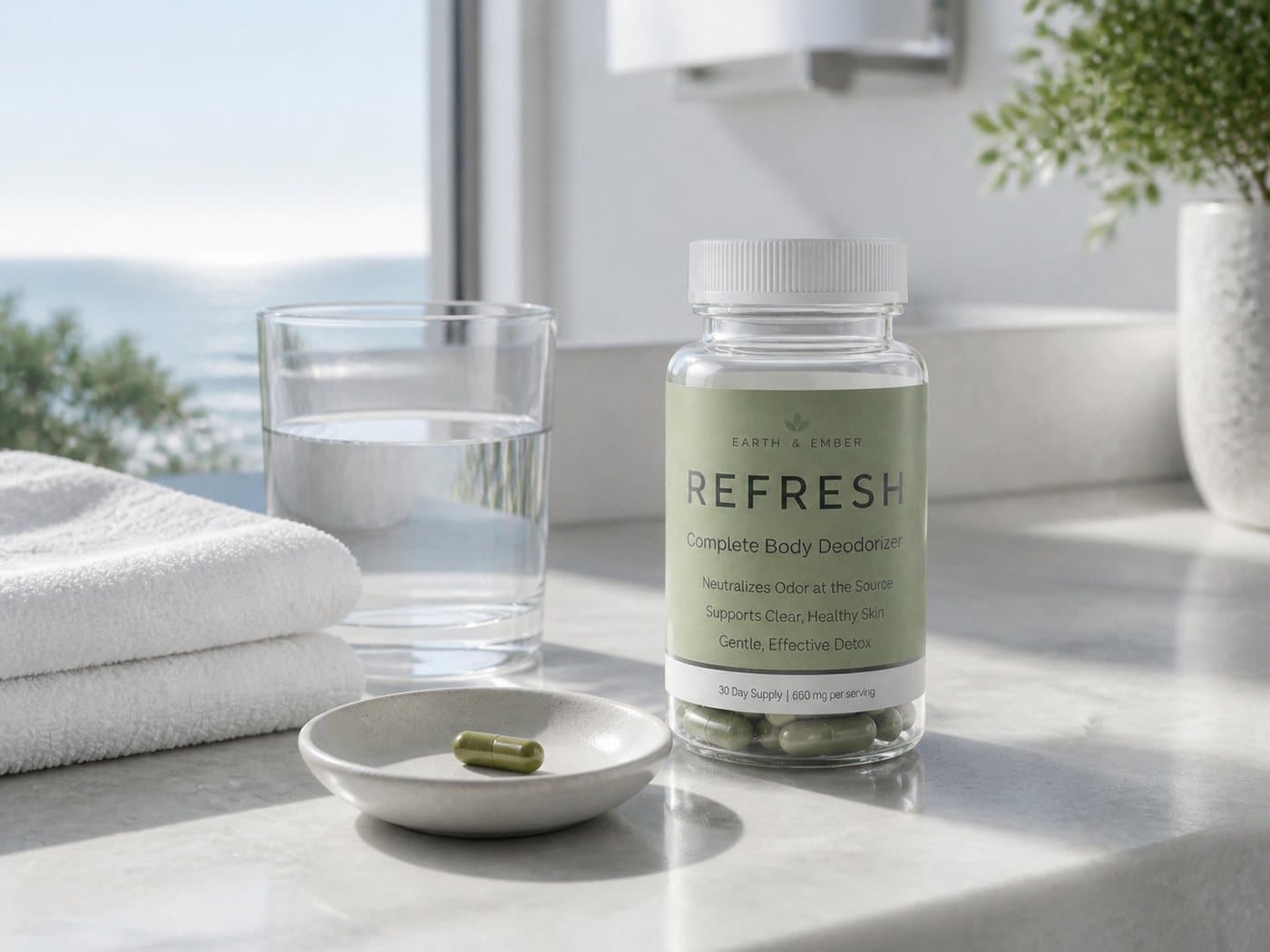
It also includes ingestibles designed to support that baseline. REFRESH is one. The category is small and growing. The shared logic is that the body's odor and freshness signal is metabolic before it is topical, and a serious routine should account for both.
We name this because the word internal can read vague. It is not. It is a small, finite set of inputs that the body translates, hour after hour, into the version of itself the surface routine eventually meets.
What it does not replace
Internal hygiene does not replace showering, brushing, deodorant, or breath care. Those products handle the surface. They have a different job. The clean read is that internal and surface work better together when both are doing what they were built to do.
A useful frame: the surface product is the finish. The internal step is the foundation. Most people only have the finish. That has been the working model of hygiene for a long time, and it still works. It just leaves the foundation unattended.
We are not asking anyone to leave behind a deodorant they trust or a shower routine that has held them together. The internal step goes underneath what is already there. It does not ask the rest of the routine to move.
Where REFRESH fits
REFRESH is designed to support the internal foundation. It is taken once daily as part of a morning routine. It does not replace the rest of hygiene. It works in front of it. The capsule is small. The thinking behind it is the part that took longer.
The shape of the routine simplifies once the foundation is in place. Less reaching for the spray after lunch. A shorter list of products doing more visible work. A standard that is easier to keep across full days, travel, and pressure.
If a single line could carry the idea, it would be this: start inside, and the surface handles the rest. The rest still happens. It just stops being the only thing happening.