
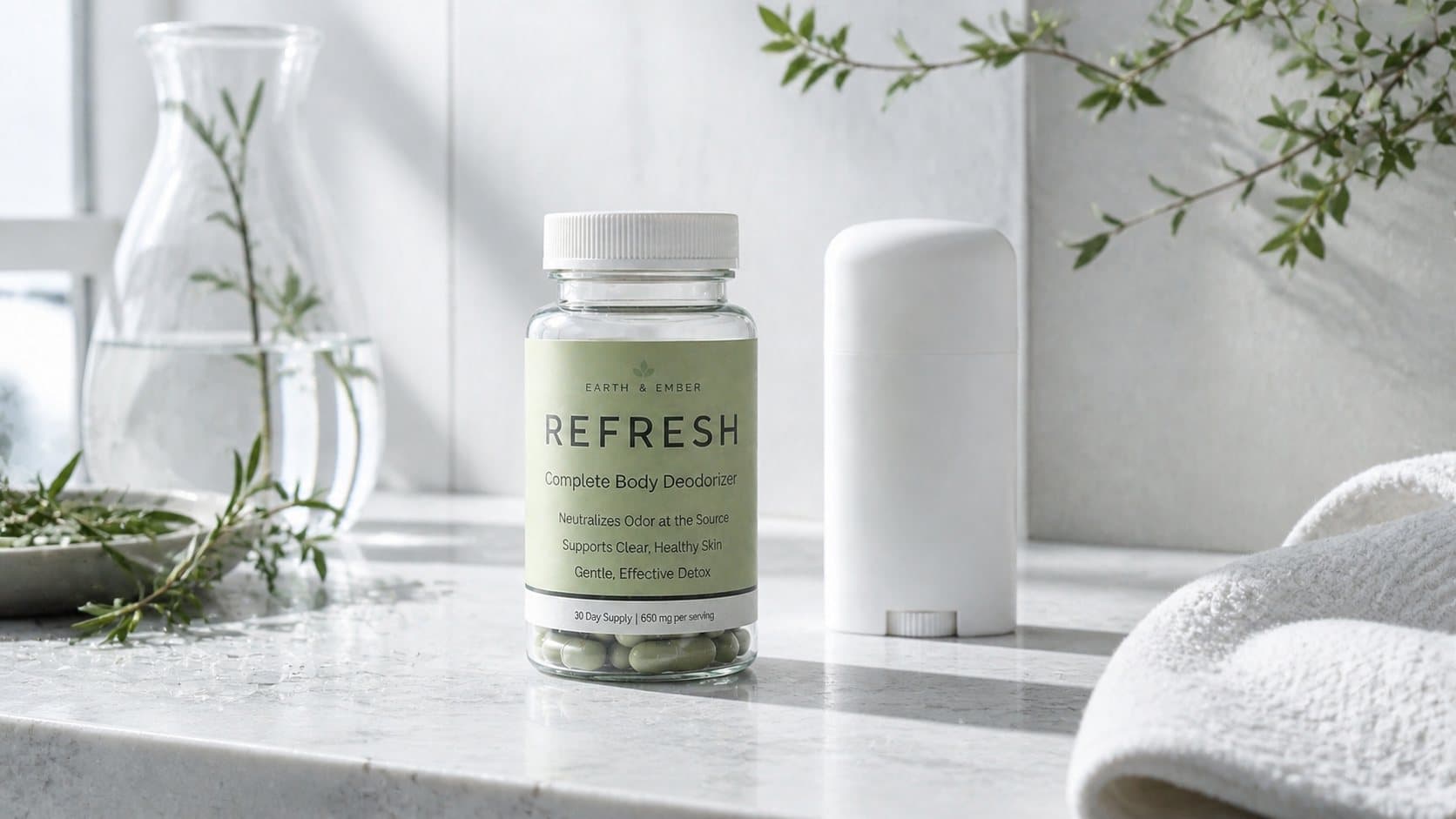
Two products, two jobs
Traditional deodorant is a surface product. It is applied to the skin and acts on the bacterial environment of the underarm, the moisture, or the local odor compounds. It is local, fast, and reactive. That design has carried hygiene a long way.
Internal deodorant is an ingestible. It is taken once daily and works through digestion and metabolism, supporting the body's baseline so that less odor compound reaches the surface in the first place. It is upstream, slower, and compounding.
The fastest way to lose this comparison is to put both products on the same axis. They are not faster or slower versions of each other. They are different points in the same chain, working on different pieces of the same outcome.
What traditional deodorant does well
Traditional deodorant is the right tool for an immediate need. After a shower, before a meeting, ahead of a workout. It is fast, portable, and predictable when the load is moderate. The category has decades of formulation behind it, and most people already know which versions they like.
It is also a personal product with a long history of formulation. People know what they like. We are not in the business of asking anyone to leave that behind.
If a deodorant has been carrying you well, the right move is not to replace it. The right move is to ask whether the days it does not carry are days the deodorant should have been asked to carry alone in the first place. The honest read is that most deodorants are doing more than their share, not less.
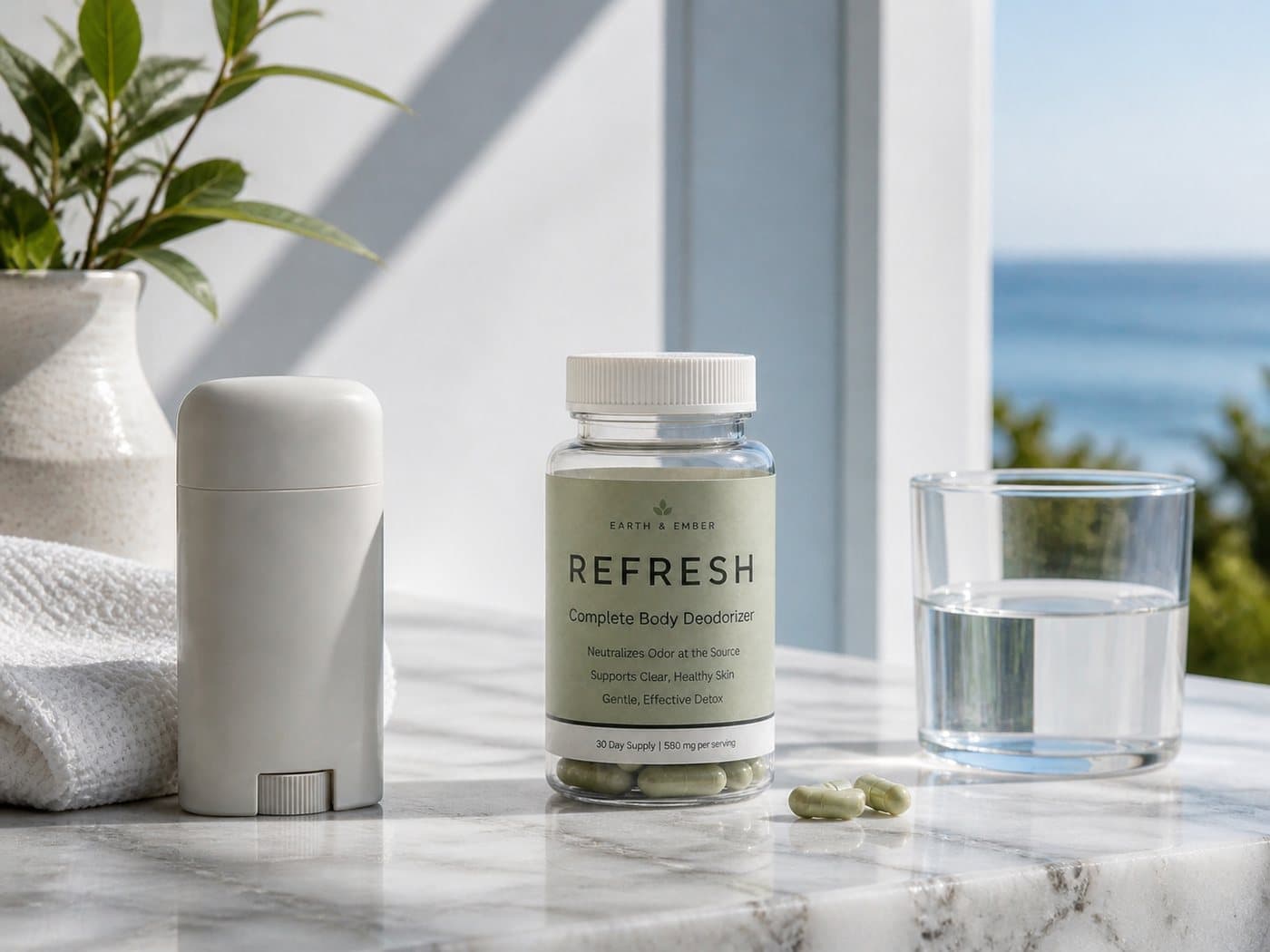
What internal deodorant adds
An internal deodorant works on what arrives at the skin, not the skin itself. It is designed to support the internal baseline so surface products are not the only thing absorbing the workload across a long day.
Customers tend to describe the same shape of result. They still use deodorant. They just notice less reaching for it after lunch, on travel days, or under stress. That is the signal an internal product is doing its job.
The point worth holding onto is that the visible win is usually quiet. A surface product gives you a sharp before and after at the moment of application. An internal product gives you a different shape of day. The first is loud and immediate. The second is layered and easy to miss if you are not paying attention to the right thing.
Where they actually meet
The clean read is sequential. Internal first, surface second. The internal step lowers the load. The surface step finishes the moment.
Where they overlap is not a conflict. It is redundancy in the right direction. A high-pressure day, a long flight, an unfamiliar climate. Two layers of support is the point.
It is also why we do not write about REFRESH as a substitute for a surface routine. The substitute frame is the wrong one. The right frame is layering, with each layer designed for what the other cannot reach.
The honest answer about replacement
Some customers report that they reach for deodorant less often. Some report that they reserve deodorant for specific days. We do not recommend making that the goal. We do not recommend that as a goal. It is an outcome some people land on.
REFRESH is built as a foundation, not a replacement. The product that finishes the job at the surface is doing important work. We would rather have both.
If the comparison eventually settles in your routine as a different shape from this, that is your call. We have a strong opinion on what we built. We do not have a strong opinion on what your routine should look like at the end of the year.
What we want, more than any single ratio of internal to surface, is a customer with a routine they actually keep. The bottle on the counter is only useful if it gets used the same way every morning, beside the surface tools that are already doing their part.