

One body, three surfaces
Most hygiene routines separate breath, sweat, and skin into three different problems. Three products. Three regimens. Three sets of frustrations when something is not holding.
The body is not split that way. The three surfaces are downstream of the same metabolic system. Reading them together makes the routine simpler, not more complicated.
Once you see the three as a group, a lot of small frustrations stop looking like product problems and start looking like input problems. That is a more useful read, even if it asks the routine to do less rather than more.
The gut as a hub
The gut is where most of the body's daily chemistry begins. Food is broken down. Compounds are absorbed. The bloodstream carries those compounds outward. Some are reabsorbed and cleared. Others travel to the surface, where they show up as breath, sweat, or skin output.
When people say internal hygiene, this is the part of the body they are pointing at. Not as a single organ. As the closest thing to a hub the surface routine has.
The hub framing matters because it changes what counts as relevant. A high-protein dinner and a sleepless night are not topics for the deodorant aisle alone. They are reasons to start earlier than the deodorant aisle.
Breath: volatile compounds and their path
A meaningful share of breath odor compounds form during digestion. They travel through the bloodstream and are exhaled through the lungs, often hours after the food that produced them. This is why brushing and rinsing only reach part of the problem. The compound is not always in the mouth. It is in the air leaving the lungs.
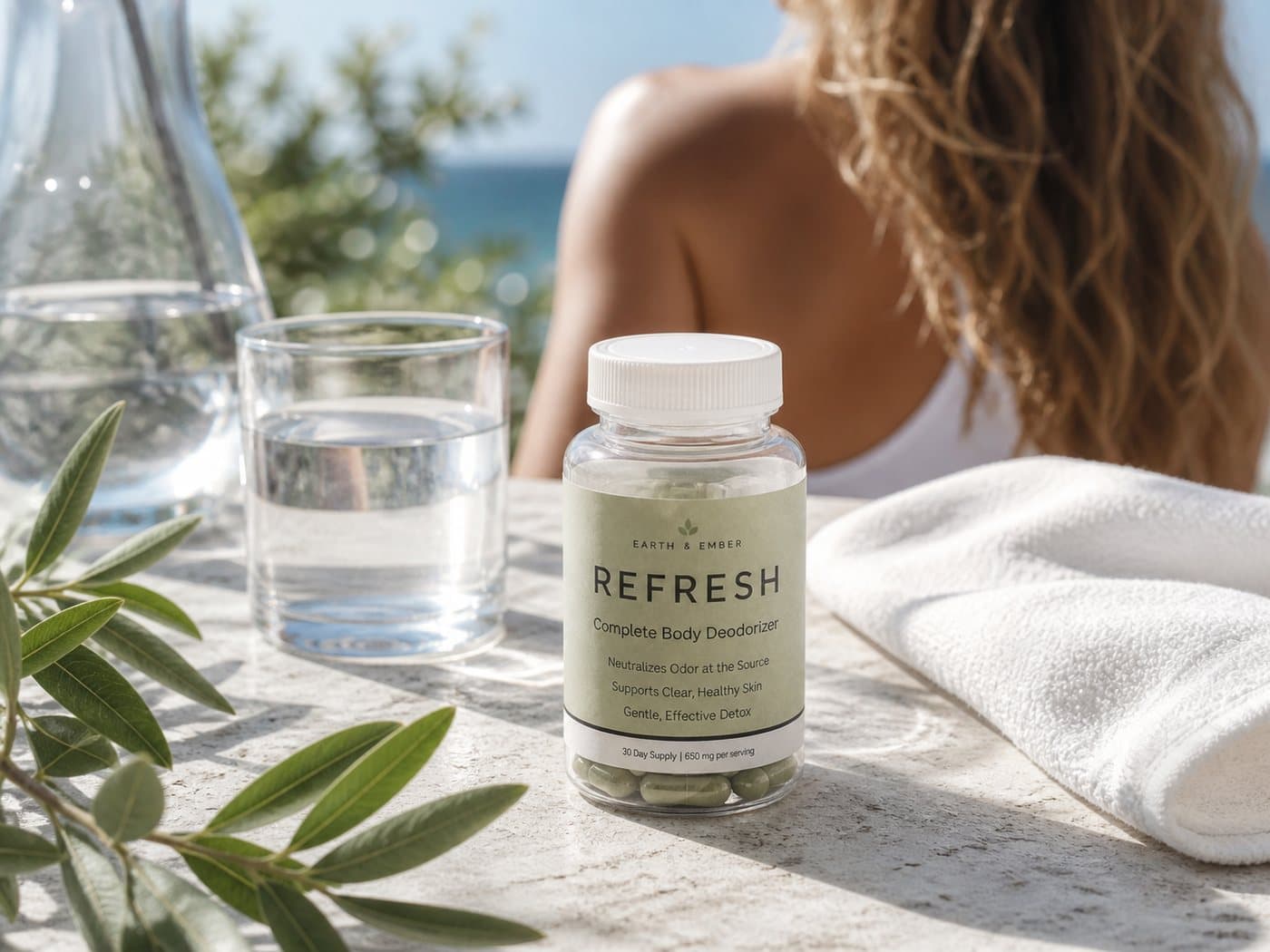
Mouth-level products handle the mouth. REFRESH starts earlier, where some breath cues begin before they ever reach the mouth.
If you have ever brushed thoroughly and still felt like the breath read had not changed, this is the explanation. The product was working on what was in the mouth. The compound was somewhere else.
Sweat: gland chemistry and what feeds it
Sweat itself is largely scentless. Odor forms when sweat meets bacteria on the skin and reacts with compounds the body produced upstream. The bacteria can be reduced topically. The compounds cannot.
An even sweat baseline often follows an even input baseline. Hydration, sleep, and daily metabolic support change the chemistry the deodorant has to absorb.
This is also why two people with similar deodorants can have very different baselines. The deodorant is not the deciding variable. The chemistry the deodorant is meeting is.
Skin: a microbial environment with metabolic input
The skin is its own ecosystem. The microbes that live on it react to the compounds passing through it. When the upstream input is calmer, the surface is asked to absorb less, and the microbial environment tends to settle in step.
This is why customers who report a settled odor baseline often also report a quieter skin baseline. The two are not unrelated.
We are careful here, because skin is a more individual surface than breath or sweat. We do not claim to address skin directly. We claim that when the upstream input is steadier, what eventually reaches the skin is steadier too.
The unifying read
Three surfaces. One upstream. The point of internal hygiene is not to add a fourth product. It is to recognize that the three you already use are reading the same chemistry from different angles.
REFRESH is designed to support that upstream read. The surface tools continue to do what they do well. The gap they cover gets smaller because the input getting to them is calmer.
If the page has a single takeaway, it is that the body has fewer problems than the bathroom shelf would suggest. The bathroom shelf is downstream. The shorter list is upstream.
The unifying read is also the reason a single product can land across breath, sweat, and skin without claiming to do anything heroic. It is not a trick. It is the chemistry the three surfaces already share.