

The shape of a routine
Most routines fail because they are too long. The good ones repeat under pressure. Tired mornings. Late nights. Travel. The internal half should be short enough to survive any of those.
The version below has four pieces. None of them are heroic. All of them are easy to keep.
If your existing routine already includes most of these, the addition is small. One step in the morning. The rest is naming the things you were already doing in a way that helps them work together.
We use the word routine carefully. A routine is not a regimen. A regimen has a feeling of obligation. A routine has a feeling of having a body and giving it the same standard every day. The internal half of hygiene fits into the second category, not the first.
Morning: the foundation moment
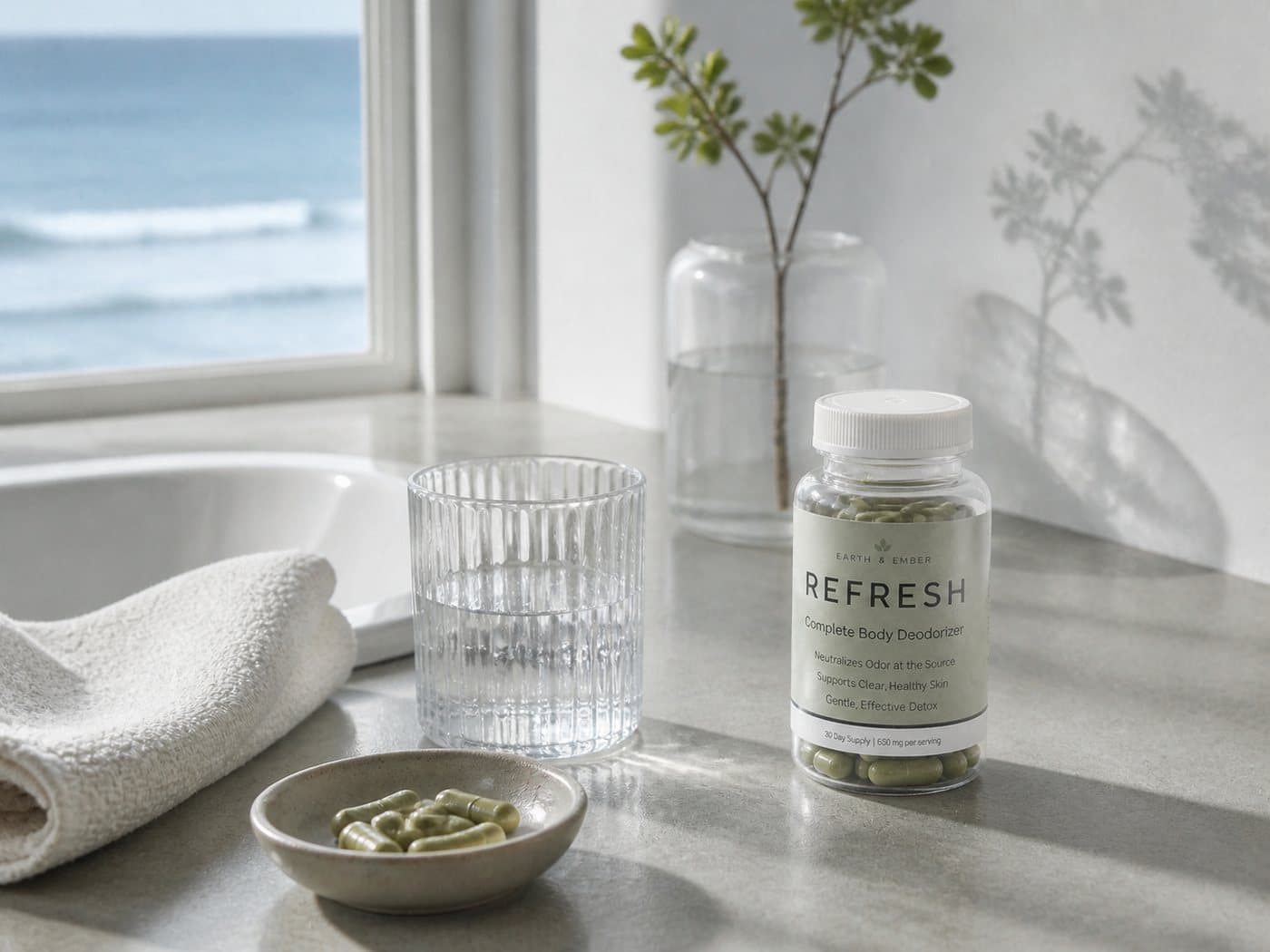
One capsule of REFRESH with water at the start of the day. Most people land on it with breakfast or a morning beverage. The exact minute is not critical. The repetition across days is.
The rest of the morning routine sits where it always has. Shower. Brush. Deodorant. Breath spray if it is part of your usual. The internal step does not change any of those. It precedes them.
If you have a complicated morning, anchor the capsule to something you already do without thinking. The first sip of water. The first cup of coffee. The same step in the same order, repeated, is the entire mechanism on the user side.
We do not recommend setting an alarm for it. The capsule should ride along on a habit you already keep, not on a reminder you have to maintain. The lower the friction, the higher the consistency.
Midday: less reaching
Midday is where most routines either hold or quietly come apart. The reapply, the second brush, the quick rinse. Track them lightly across the first few weeks and you will see the shift.
Hydrate at midday if you can. Not as a wellness ritual. As input. The cleaner the input through lunch, the calmer the input gets through the afternoon.
The midday read is the part of the day that tells you whether the foundation is doing its job. If you find yourself reaching for surface products less often around two or three in the afternoon, that is the routine working as designed.
Lunch is also worth a quiet thought. Heavy, late, or under-hydrated lunches push more work onto the surface routine in the second half of the day. Nothing about that is a rule. It is a pattern worth noticing once you start tracking the afternoon read.
Evening: light maintenance
The evening routine does not need an internal step. Sleep is the internal step. Recovery and metabolic processes continue through the night, which is part of why a consistent sleep window matters.
Brush, floss, and shower as usual. Avoid heavy late meals when you can. None of this is dramatic. All of it compounds.
If your evenings are unpredictable, do not chase a perfect version of this. A consistent morning anchor and a usable sleep window will carry the foundation further than a meticulous evening you cannot keep.
Travel and pressure days
Travel and high-pressure days are where the foundation earns its name. Long flights, time zone shifts, conferences, weddings, presentations. These are also the days where most routines are abandoned.
Bring REFRESH with you. Take it the same morning anchor as at home. Carry water. The rest of hygiene continues. The point of having a foundation is that it is the part that does not move when everything else does.
If your travel is across time zones, anchor the capsule to the start of your active day in the new zone, not the time at home. The body reads the start of motion as the start of the day. The capsule should match it.
On the road, the rest of hygiene tends to go casual. The deodorant gets reapplied more than usual. The water intake drops. The food gets unfamiliar. A foundation product is exactly what those days were built for. The point of having one is to not feel like the whole routine collapsed because the city changed.